
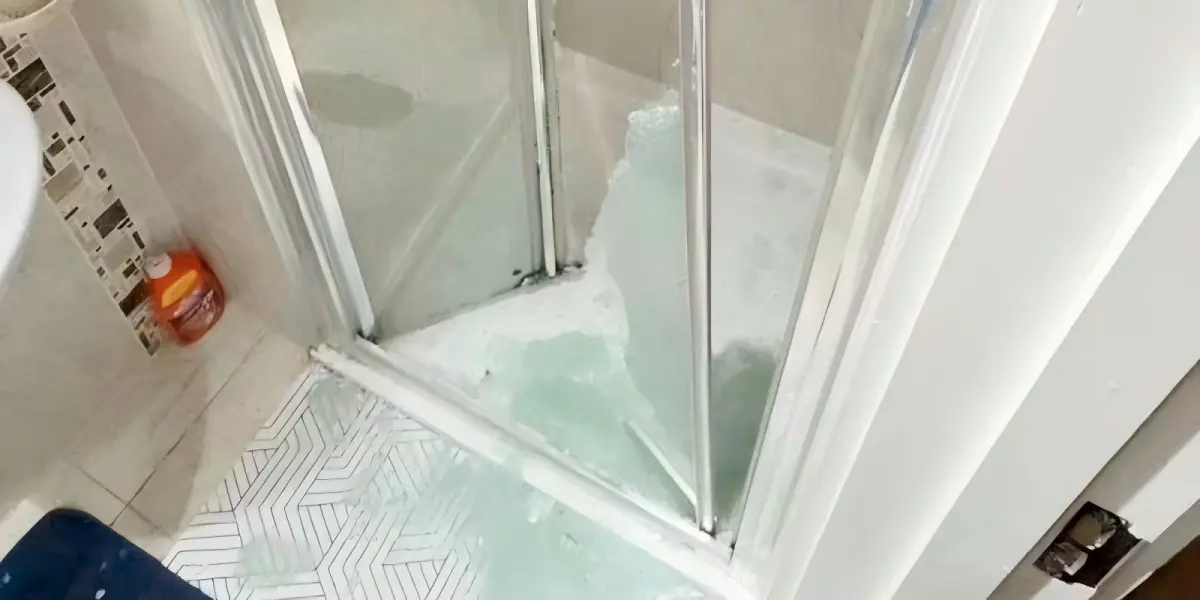
Does Tempered Glass Really Have a 3‰ Spontaneous Breakage Rate?
If you’ve sourced tempered glass before, you’ve probably heard this:
“Tempered glass has a 3‰ spontaneous breakage rate.”
Is that true?
Maybe. Maybe not.
The truth is, nobody has ever tracked millions of glass panels to prove that 3‰ is the real average. It’s an engineering estimate based on research and industry experience—not a fixed number that applies to every piece of glass.
But honestly, I don’t think the number is the most important part.
As a buyer, a better question is:
What is your supplier doing to reduce that risk?
After more than 20 years making shower door glass, here’s what I believe matters most.
1. Start with Good Float Glass
Good glass starts with good raw materials.
High-quality float glass contains fewer impurities, giving you a better foundation before tempering even begins.
2. Keep the Tempering Process Stable
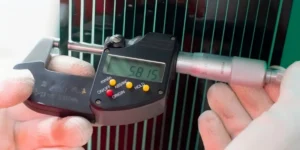
A stable tempering process makes a huge difference.
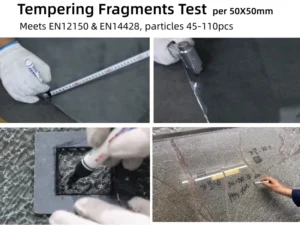
Passing EN 12150 is only the minimum requirement. We also pay close attention to fragmentation results because they tell us whether the internal stress is stable—not just whether the glass passes the test.
3. Use Heat Soak Testing When Needed
Heat Soak Testing (HST) helps identify glass with critical NiS inclusions before shipment.
It adds cost, so it’s not necessary for every project, but it’s a good option when extra safety is required.
Don’t Assume Every Broken Panel “Self-Exploded”
I’ve seen many broken panels that had nothing to do with NiS.
Edge damage, incorrect installation, hardware stress, or accidental impact are often the real reasons.
That’s why it’s important to find the cause before calling it spontaneous breakage.
Final Thoughts
Whether the number is 3‰ or a little higher or lower, it shouldn’t be the only thing you focus on.
A reliable supplier doesn’t just tell you the risk exists.
They show you how they reduce it—through better raw materials, stable tempering, and consistent quality control.
Because in the end, buyers don’t purchase a number.
They purchase confidence.