
Why Experienced Buyers Don’t Always Choose the Lowest Quote
A customer once told us,
“Your quotation isn’t the lowest.”
He wasn’t complaining.
He wasn’t trying to negotiate.
He was simply asking why.
It was a fair question.
Instead of explaining our factory, we asked him another one.
“If two suppliers offer almost the same product, why do their customers sometimes have completely different experiences after the container arrives?”
That conversation happened years ago.
We still think about it today.
Because the answer has very little to do with the quotation itself.
Price Is Agreed Before Production. Cost Is Decided After Delivery.
Comparing prices is part of every purchasing decision.
We’d do exactly the same.
But after making shower door glass for more than 20 years, we’ve learned something.
The quotation tells you what you’ll pay today.
It doesn’t tell you what you’ll pay later.
A scratched panel.
A hole that’s a few millimeters off.
Glass damaged during transport.
A shipment that can’t be installed on time.
None of those costs appear on the quotation.
But they’re all part of the purchase.
The Cheapest Supplier Doesn’t Always Become the Cheapest Shipment
On paper, two suppliers can look almost identical.
The same drawing.
The same glass thickness.
The same certification.
The same destination.
So where does the difference come from?
Usually, it’s not one big mistake.
It’s a series of small details.
A drawing that wasn’t questioned.
A dimension that wasn’t checked twice.
Packaging that looked fine in the factory but couldn’t handle six weeks at sea.
Most expensive problems start as very small ones.
Experience Changes the Questions You Ask
New buyers often compare quotations.
Experienced buyers compare risk.
They still care about price.
Of course they do.
But they also ask questions like these.
“Who reviews the drawing before production?”
“What happens if you find a problem halfway through an order?”
“How do you make sure my second order matches my first?”
Those questions usually reveal more about a supplier than another discount ever will.
We’ve Learned That Small Problems Are Cheapest in the Factory
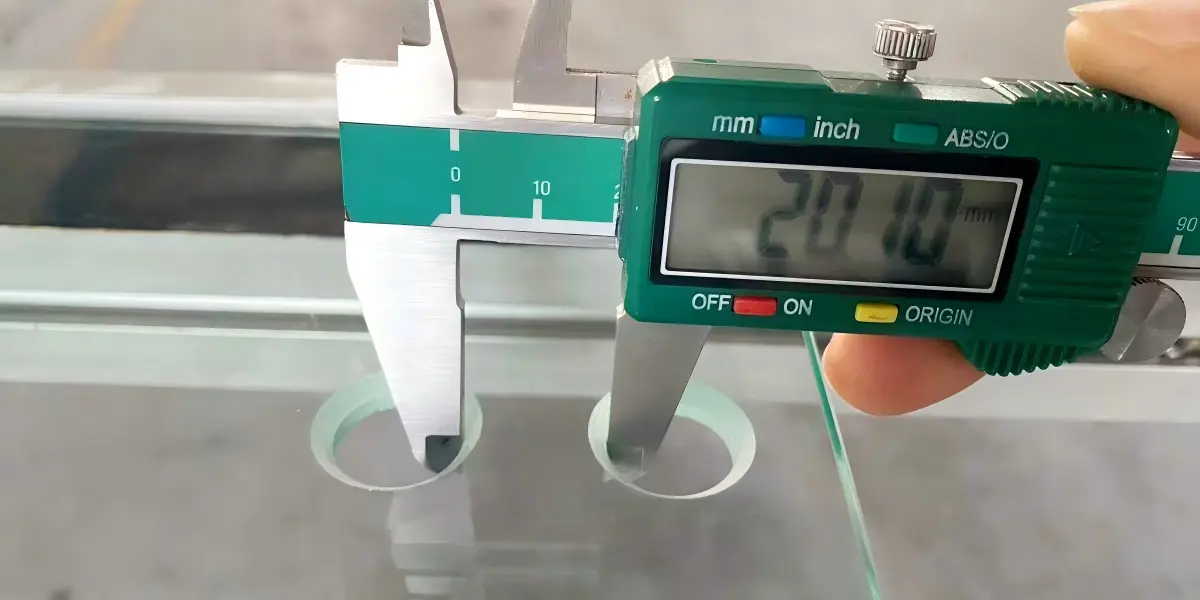
We’ve paused production because of a hole that didn’t look quite right.
We’ve remade glass because a detail didn’t meet our own expectations.
Sometimes that means extra work for us.
We’re okay with that.
Replacing one panel in our factory is easy.
Replacing it after a container has arrived on the other side of the world is not.
That’s a lesson every manufacturer learns sooner or later.
We’ve simply chosen to learn it before our customers have to.
Before We Close a Plywood Crate
People often think production ends when the glass is finished.
In reality, that’s when some of the most important work begins.
We check dimensions again.
We review the order.
For many projects, we test fragmentation.
Some shower enclosures are trial assembled before packing.
Not because every customer asks us to.
Because once the container leaves China, every mistake becomes more expensive.
One More Question Before Choosing a Supplier
The next time you’re comparing quotations, try asking something other than price.
Ask this instead.
“Where is a problem most likely to be discovered?”
In the factory?
Or after delivery?
The answer may tell you much more than the quotation ever will.
Procurement Note
The cheapest quote is easy to compare.
The cheapest shipment is much harder to find.
Experienced buyers know the difference.
Frequently Asked Questions
Is the lowest-priced shower door glass supplier always the best choice?
Not always. A lower quotation can lead to higher overall costs if quality issues, shipping damage, delays, or replacements occur after production.
What hidden costs should buyers consider when sourcing shower door glass?
Look beyond the quotation. Installation delays, damaged glass, inconsistent quality, packaging failures, and communication costs often have a much bigger impact than a small price difference.
How can I reduce sourcing risk when buying shower door glass?
Choose a supplier that has consistent production processes, reviews drawings before manufacturing, performs quality checks throughout production, and focuses on preventing problems before shipment.